As manufacturing continues to evolve, the demand for increasingly complex, high-precision components has never been greater. Industries such as aerospace, medical, defense and optical require parts with intricate geometries, tight tolerances and exceptional consistency. Traditional machining methods often struggle to meet these requirements efficiently, which is why multi-axis CNC machining has become the preferred solution for many manufacturers.
By allowing the cutting tool and workpiece to move simultaneously across multiple axes, multi-axis CNC machining enables the production of sophisticated components with fewer setups, greater precision and faster production times.
At P4Swiss / Lindel CNC Machining, we leverage advanced 3-axis, 4-axis, 5-axis and 7-axis machining capabilities to manufacture complex components for some of the most demanding applications.
In this guide, we'll explore the benefits of multi-axis CNC machining, how it works and why manufacturers rely on it to produce precision parts.
Table of Contents
What Is Multi-Axis CNC Machining?
Multi-axis CNC machining is a manufacturing process that uses computer-controlled machines capable of moving a cutting tool or workpiece along multiple axes simultaneously. Unlike conventional machining, which typically operates on three linear axes (X, Y and Z), multi-axis machining adds rotational axes, allowing the machine to approach a part from virtually any angle.
Common configurations include:
- 3-Axis CNC Machining – Ideal for simple shapes and flat surfaces.
- 4-Axis CNC Machining – Adds rotational movement for machining multiple sides of a part.
- 5-Axis CNC Machining – Enables the machining of extremely complex parts in a single setup.
- 7-Axis CNC Machining – Offers maximum flexibility and precision for advanced applications.
3-Axis CNC Machining
Standard movement along X, Y and Z axes.
4-Axis CNC Machining
Adds rotational movement around the X-axis (often referred to as the A-axis).
5-Axis CNC Machining
Adds additional rotation around the X-axis and Y-axis (A-axis and B-axis).
7-Axis CNC Machining
Has all the capabilities of 5-axis machining, but with two additional rotational axes.
These advanced capabilities make multi-axis CNC machining the preferred choice for manufacturers producing intricate, high-performance components.
Why Multi-Axis CNC Machining Matters
Today's products are becoming smaller, lighter and more sophisticated. Components often feature complex contours, deep pockets, compound angles and tight tolerances that are difficult — or impossible — to produce using traditional machining methods.
Multi-axis CNC machining solves these challenges by improving accuracy, reducing production time and minimizing the need for multiple setups.
Whether you're manufacturing aerospace brackets, medical instruments, defense hardware or optical components, multi-axis machining offers significant advantages over conventional machining.
Advantages of Multi-Axis Machining
1. Greater Precision and Accuracy
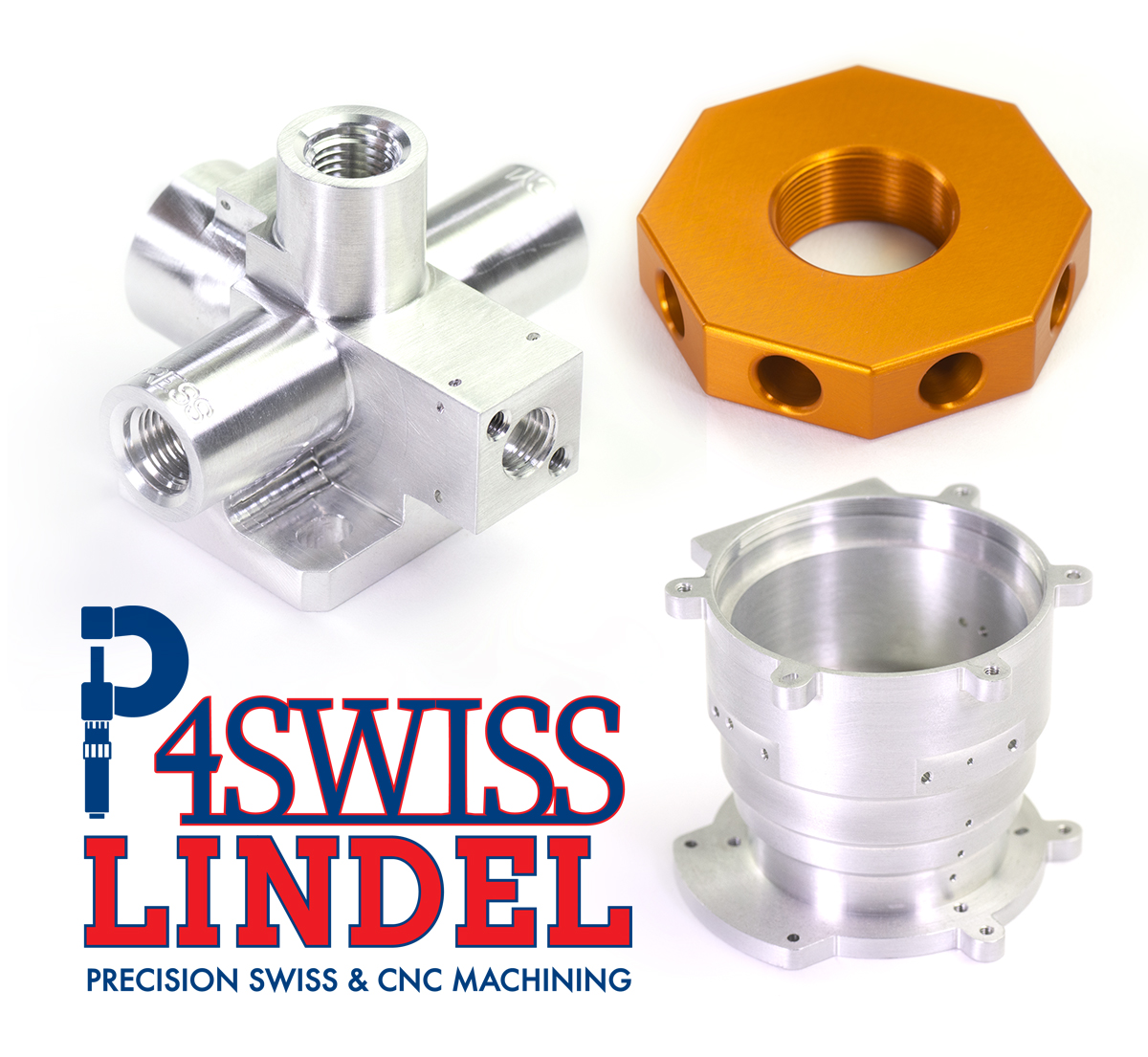
One of the biggest benefits of multi-axis CNC machining is its ability to achieve exceptional precision.
Because the workpiece can be machined from multiple angles without being repositioned, there is less opportunity for alignment errors. This results in tighter tolerances and greater dimensional accuracy. For industries like aerospace and medical manufacturing, where even the smallest variation can affect performance, this level of precision is essential.
At P4Swiss / Lindel CNC Machining, our advanced machining capabilities allow us to consistently produce high-quality components that meet exact customer specifications.
2. Fewer Setups Improve Consistency
Traditional machining often requires operators to stop production and manually reposition the workpiece several times.
Every setup introduces the possibility of:
- Alignment errors
- Dimensional inconsistencies
- Longer production times
Multi-axis CNC machining dramatically reduces these issues by machining multiple surfaces during a single setup.
As a result, manufacturers benefit from:
- Greater repeatability
- Improved consistency
- Higher-quality finished parts
3. Complex Geometries Become Easier to Produce
Many modern components include intricate features that cannot be reached using traditional machining methods.
With multi-axis machining, manufacturers can easily produce:
- Compound angles
- Sculpted surfaces
- Deep cavities
- Curved profiles
- Precision holes
- Complex pockets
- Multi-sided features
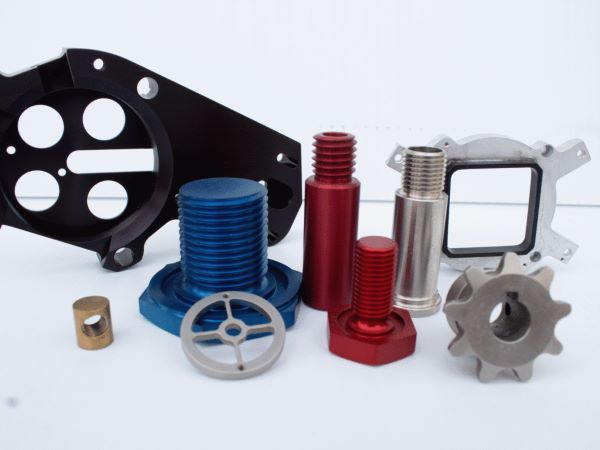
This flexibility opens new design possibilities while maintaining exceptional accuracy throughout production.
4. Shorter Production Times
Efficiency is a major advantage of multi-axis CNC machining.
Since multiple machining operations can be completed during one setup, overall production time is significantly reduced.
Benefits include:
- Faster machining cycles
- Reduced setup time
- Less manual intervention
- Quicker project completion
For manufacturers facing tight deadlines, these efficiencies can provide a valuable competitive advantage.
5. Better Surface Finishes
Because the cutting tool approaches the workpiece from optimal angles, multi-axis machining often produces smoother surface finishes than traditional machining.
Improved tool positioning reduces vibration and tool marks while maintaining consistent cutting conditions throughout the machining process.
This often reduces or eliminates the need for secondary finishing operations, saving both time and production costs.
6. Improved Repeatability
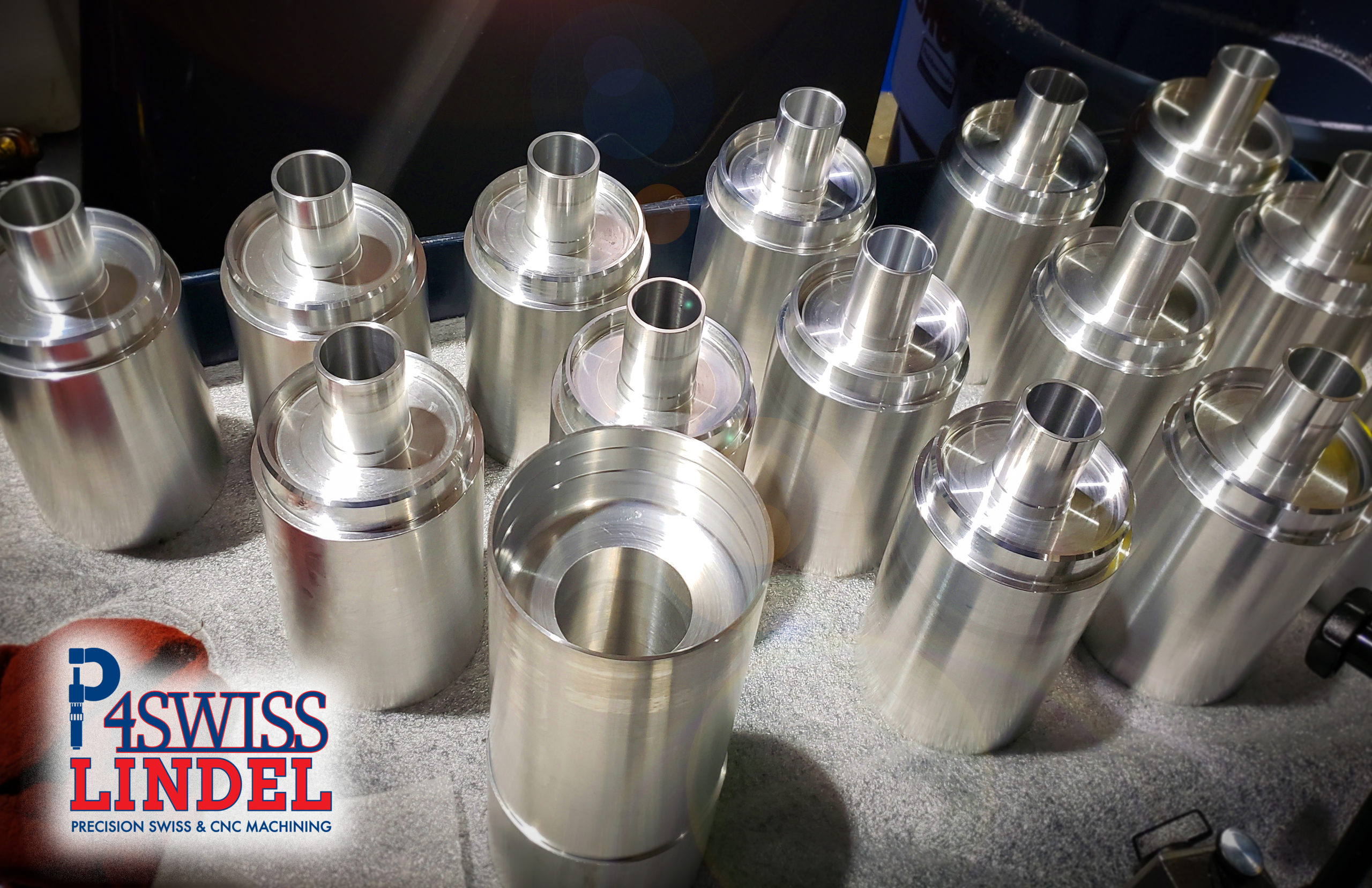
Consistency is critical in precision manufacturing.
Once a machining program has been validated, multi-axis machining allows manufacturers to produce identical parts repeatedly with outstanding accuracy.
This repeatability provides:
- Consistent part quality
- Better product performance
- Increased customer confidence
Whether producing ten parts or a thousand, manufacturers can expect the same high level of quality throughout the production run.
7. Supports a Wide Range of Materials
Another advantage of multi-axis CNC machining is its versatility.
At P4Swiss / Lindel CNC Machining, we manufacture a variety of materials, including:
- Aluminum
- Titanium
- Stainless Steel
- Copper
- Bronze
- Brass
- Teflon
- Plastics (Delrin, Noryl, PEEK, PVC & UHMW)
Our experience with these materials allows us to optimize machining strategies for each project while maintaining exceptional precision and efficiency.
Industries That Benefit from Multi-Axis CNC Machining
Aerospace Manufacturing
Aerospace components require lightweight designs, complex geometries and tight tolerances. Multi-axis machining enables manufacturers to produce intricate structural and mechanical components with exceptional precision.
Medical Manufacturing
Medical devices often feature intricate designs and miniature components. Multi-axis machining allows manufacturers to produce surgical instruments, implants and medical device components with superior accuracy and repeatability.
Defense Manufacturing
Defense applications require durable, high-performance components capable of operating in demanding environments. Multi-axis machining helps produce precision brackets, fasteners, structural components and specialized hardware.
Optical Manufacturing
Optical systems demand extremely tight tolerances. Multi-axis machining allows manufacturers to create complex housings, mounts and precision components that ensure accurate alignment and reliable performance.
Partner with Experts in Multi-Axis Machining
As products become more sophisticated, manufacturers need machining solutions capable of keeping pace with increasing complexity.
Multi-axis CNC machining provides the precision, efficiency and flexibility necessary to produce intricate components with exceptional consistency.
Frequently Asked Questions
Multi-axis CNC machining is a precision manufacturing process that allows a cutting tool or workpiece to move along multiple axes simultaneously, enabling complex parts to be machined with greater accuracy and fewer setups.
