
When planning a precision manufacturing project, one of the first decisions you’ll face is whether CNC milling or CNC turning is the better process for your part. Both are essential CNC machining methods, and each offers unique advantages depending on geometry, tolerances, material and production volume.
At P4Swiss / Lindel CNC Machining, we provide advanced milling and turning services to support industries such as aerospace, defense, medical, optical and industrial manufacturing. Understanding the differences between these processes helps ensure you select the most efficient, cost-effective and precise solution for your application.
In this guide, we’ll break down CNC milling vs. CNC turning, exploring their strengths and helping you determine which is best for your project.
Table of Contents
What Is CNC Milling?
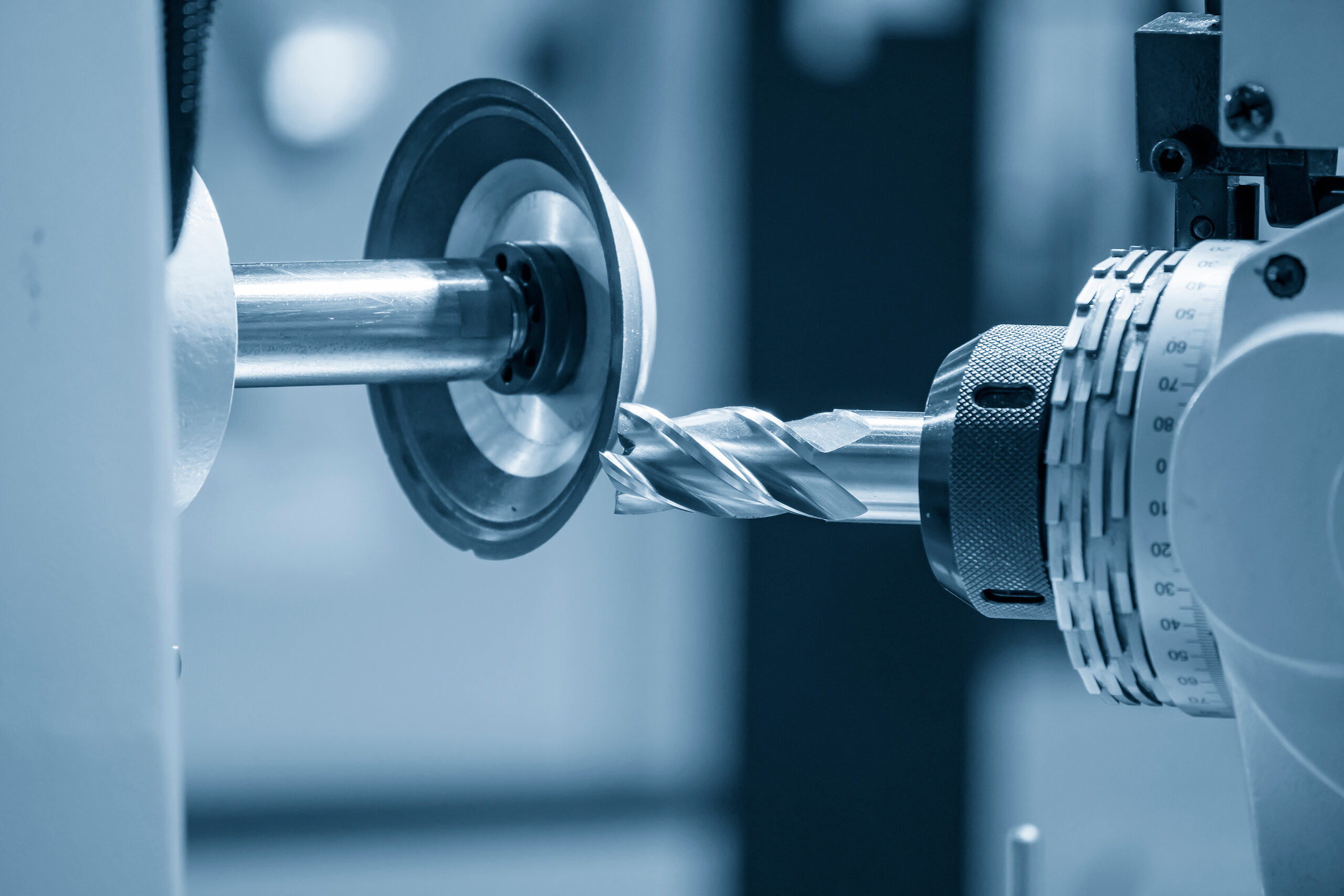
CNC milling is a subtractive machining process where a rotating cutting tool removes material from a stationary workpiece. The cutting tool moves along multiple axes (X, Y and Z — and in advanced setups, additional rotational axes) to shape the material into the desired form.
CNC milling is highly versatile and capable of producing:
- Complex 3D geometries
- Flat surfaces and contours
- Deep pockets and cavities
- Slots and keyways
- Angled features
- Detailed surface finishes
At P4Swiss / Lindel CNC Machining, our 3-axis, 4-axis, 5-axis and 7-axis milling machines allow us to produce intricate components with tight tolerances and excellent repeatability.
What Is CNC Turning?
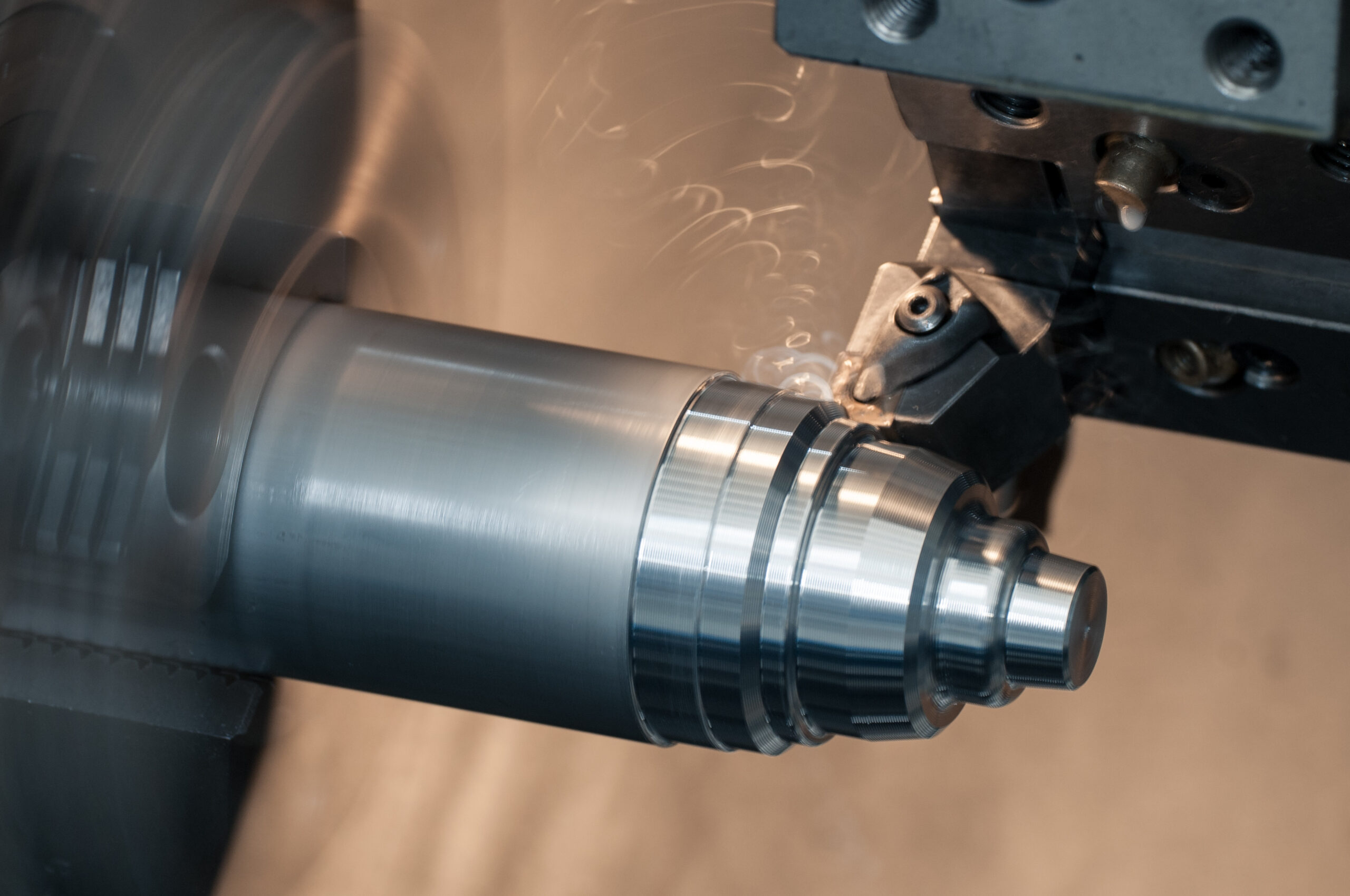
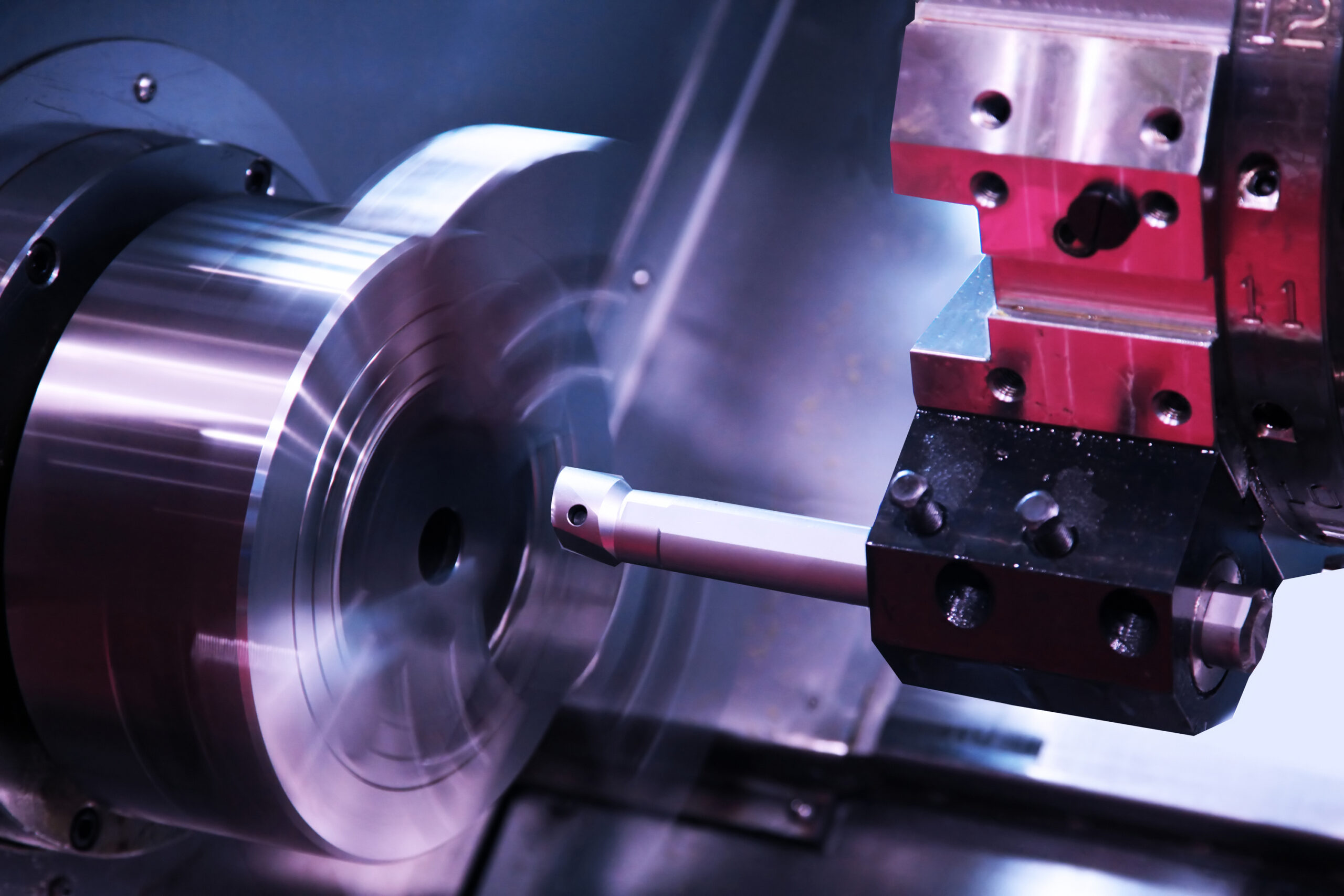
CNC turning operates differently. Instead of the cutting tool rotating around the material, the workpiece itself rotates while a stationary cutting tool removes material.
CNC turning is ideal for parts with cylindrical or round geometries, such as:
- Shafts
- Bushings
- Fittings
- Pins
- Connectors
- Fasteners
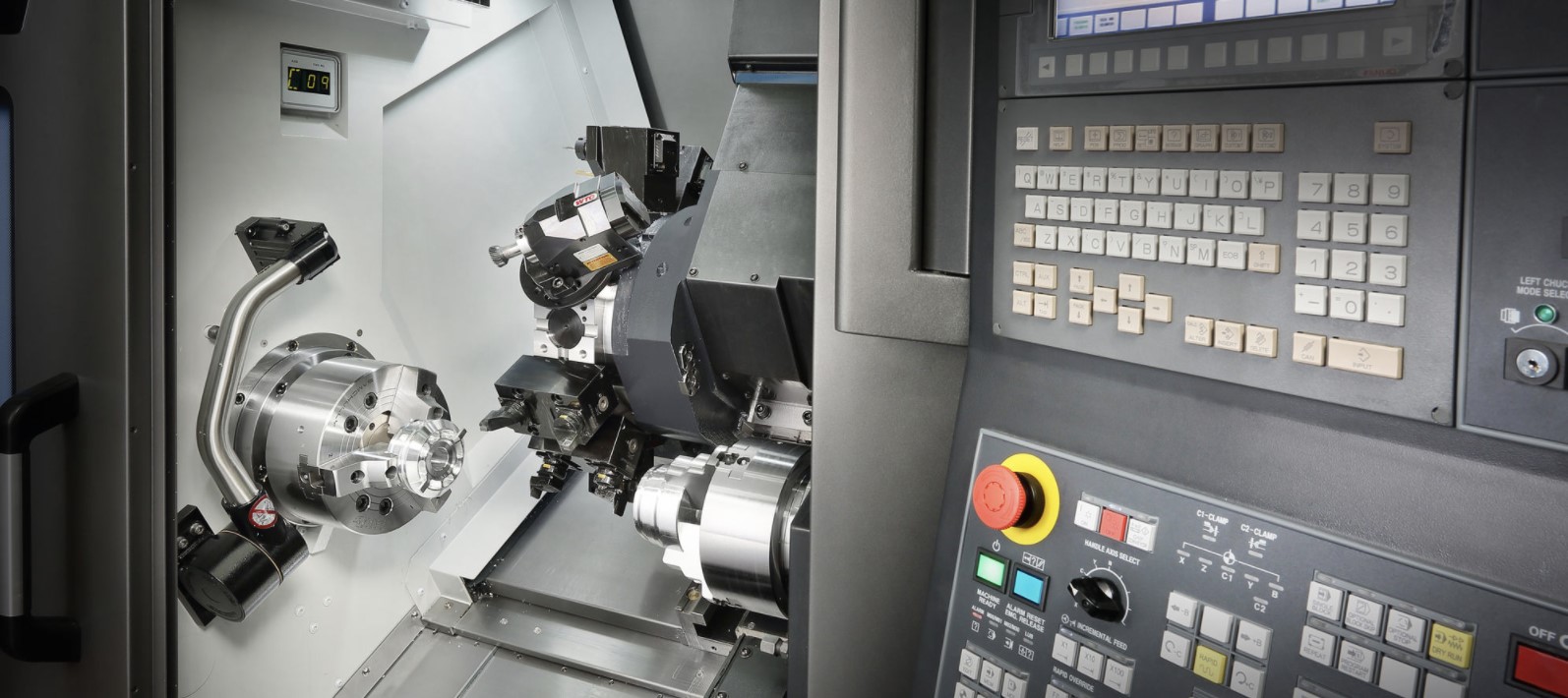
Modern CNC turning centers, especially those equipped with live tooling, can also perform milling and drilling operations in a single setup. At P4Swiss / Lindel CNC Machining, our live-tooling turning centers allow us to reduce secondary operations while maintaining tight dimensional control.
The Core Difference: Motion and Geometry
The main difference between CNC milling and CNC turning lies in how the material and tool move:
- In CNC milling, the cutting tool rotates while the workpiece remains fixed.
- In CNC turning, the workpiece rotates while the cutting tool remains stationary.
Because of this fundamental distinction, each process is better suited for certain part designs.
If your component is primarily cylindrical, turning is often the more efficient choice. If your part has flat faces, complex contours or non-round geometry, milling is typically the better option.
When to Choose CNC Milling
CNC milling excels in applications that require complex shapes, detailed features and multi-surface machining.
Choose CNC Milling If Your Part:
- Has irregular or prismatic geometry
- Requires multiple flat surfaces
- Contains deep cavities or pockets
- Needs angled or contoured surfaces
- Requires tight tolerances across multiple planes
Advanced multi-axis milling further expands capabilities. With 5-axis milling, machinists can approach the workpiece from virtually any angle, reducing setups and improving accuracy.
Industries such as aerospace and medical manufacturing frequently rely on CNC milling for structural brackets, housings and intricate components.
When to Choose CNC Turning
CNC turning is ideal for rotationally symmetrical parts. Because the material spins during machining, it naturally produces consistent cylindrical geometry.
Choose CNC Turning If Your Part:
- Is round or tubular
- Requires concentricity and symmetry
- Has threaded features
- Needs smooth outer diameters
- Requires high repeatability for shaft-like components
Turning is typically faster and more cost-effective for round parts because the process is optimized for continuous rotational cutting.
For high-volume production of cylindrical components, CNC turning offers excellent efficiency and consistent results.
Precision and Tolerances
Both CNC milling and CNC turning can achieve tight tolerances when performed on modern CNC equipment. However, the geometry of the part often influences which method provides greater precision.
- CNC turning naturally produces highly concentric features.
- CNC milling provides exceptional control over complex 3D geometries.
At P4Swiss / Lindel CNC Machining, our quality-controlled environment ensures both processes maintain strict dimensional standards. Our advanced CAM programming and ISO-certified processes support repeatability from prototype through full production.
Material Compatibility
Both CNC milling and CNC turning can machine a wide variety of materials, including:
- Aluminum
- Stainless steel
- Titanium
- Brass
- Copper
- High-performance alloys
- Engineering plastics
Material selection may influence process choice. For example, harder materials like titanium may benefit from optimized toolpaths in multi-axis milling, while brass fittings may be more efficiently produced using turning.
Our team works closely with customers to evaluate material type, part design and performance requirements before selecting the optimal machining approach.
Efficiency and Production Volume
Production goals also impact the decision between CNC milling and CNC turning.
CNC Turning Advantages in High-Volume Runs
Turning is often faster for simple cylindrical parts. With fewer setups and continuous rotation, cycle times can be shorter, making it highly efficient for large production runs.
CNC Milling Advantages for Complex Parts
While milling may take longer for highly detailed components, it reduces the need for multiple operations and secondary processes when working with intricate designs.
When combined with advanced 4-axis or 5-axis capability, CNC milling can significantly reduce repositioning and improve production efficiency.
Combining CNC Milling and CNC Turning
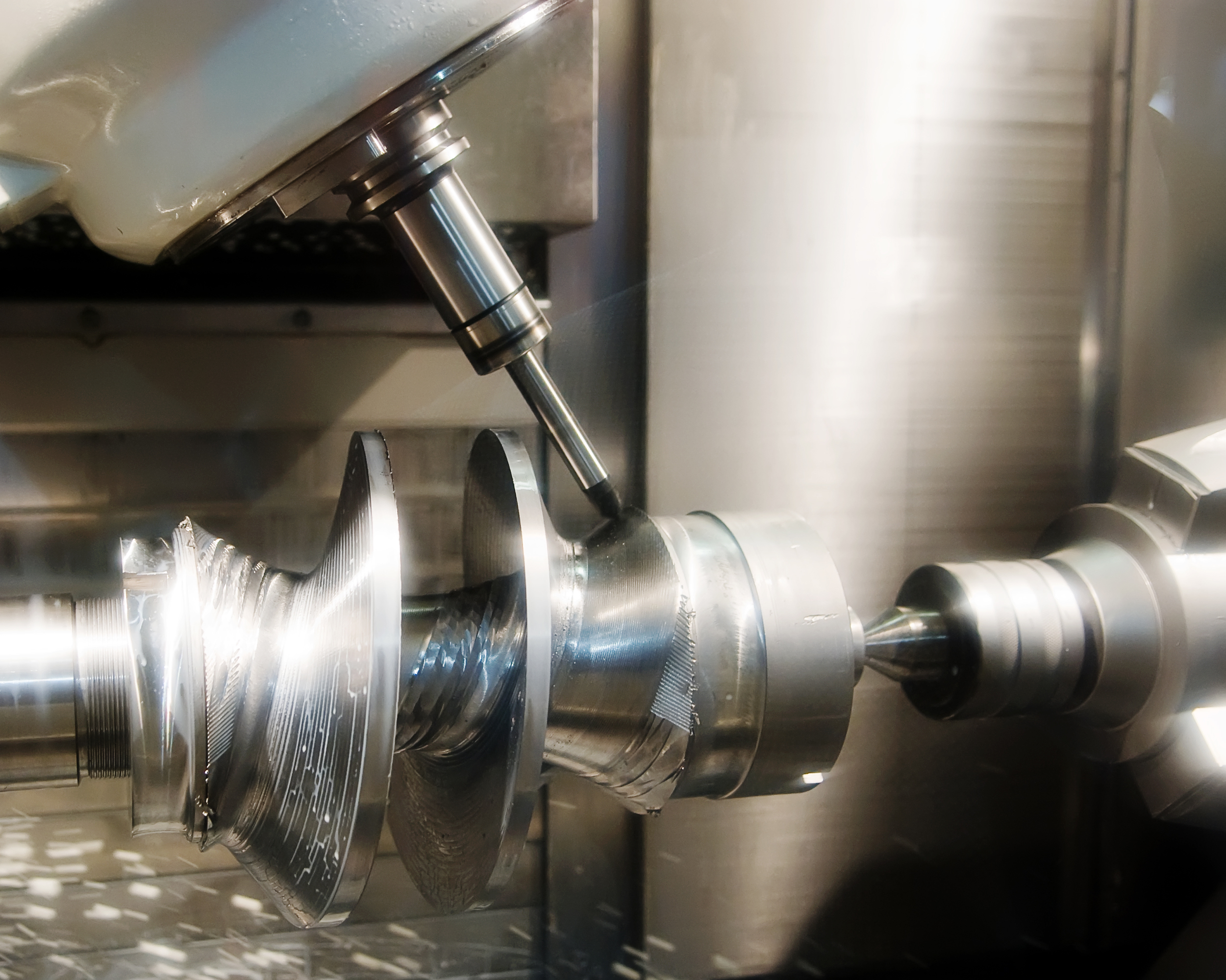
Many projects benefit from using both processes. Hybrid machines equipped with live tooling allow manufacturers to combine milling and turning in a single setup. For example:
- A cylindrical part may be turned for its outer diameter.
- The same part may require milled slots or cross-drilled holes.
- Threads and detailed features can be added without moving the part.
By integrating CNC milling and CNC turning, P4Swiss / Lindel CNC Machining reduces handling, improves alignment and enhances part consistency.
Cost Considerations
Cost depends on several factors:
- Part geometry
- Material type
- Production volume
- Tolerance requirements
- Surface finish needs
Generally:
- CNC turning is more cost-effective for simple round parts.
- CNC milling is necessary for complex geometries.
- Multi-axis machining may reduce overall cost by minimizing setups.
Choosing the right process from the beginning prevents unnecessary machining time and reduces overall project expenses.
Industry Applications
Aerospace
In the aerospace industry, complex structural components often require CNC milling, while fasteners and fittings are commonly produced using CNC turning.
Medical
In medical manufacturing, surgical instruments may require turning for cylindrical handles and milling for intricate features.
Defense
In the defense industry, high-performance components frequently use both CNC milling and CNC turning for precision assemblies.
Optical
In the optical industry, housings may be milled for precise alignment surfaces and turned for concentric components.
P4Swiss / Lindel CNC Machining supports all these industries with advanced equipment and experienced machinists.
How to Determine Which Process Is Right for You
When evaluating CNC milling vs. CNC turning, consider:
1. Is your part round or cylindrical?
2. Does it require complex 3D features?
3. What tolerances must be maintained?
4. What is the production volume?
5. Can combining processes improve efficiency?
Working with an experienced machining partner ensures these questions are answered accurately before production begins.
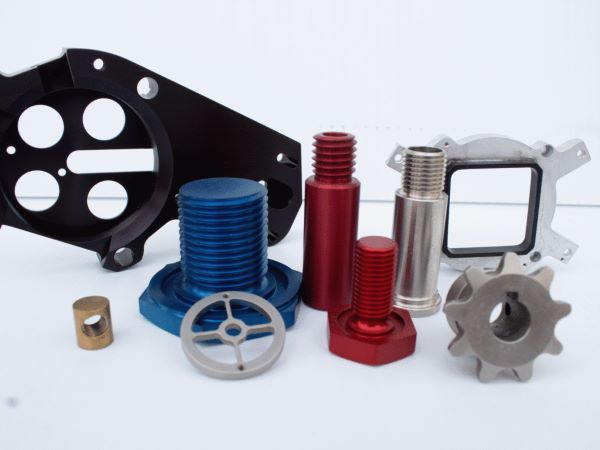
Why Choose P4Swiss / Lindel CNC Machining?
With decades of experience in precision manufacturing, P4Swiss / Lindel CNC Machining offers:
- Advanced milling (3-axis, 4-axis, 5-axis and 7-axis)
- High-precision CNC turning with live tooling
- ISO-certified quality processes
- Expertise across multiple industries
- Support from prototype to high-volume production
Our team evaluates every project individually to determine whether CNC milling, CNC turning or a combination of both will deliver the best results.
CNC Milling vs. CNC Turning
There is no universal answer to whether CNC milling or CNC turning is best. The right choice depends entirely on your part’s geometry, material, tolerance requirements and production goals.
Milling excels in complexity and multi-surface precision. Turning shines in efficiency and cylindrical accuracy. Together, they form the backbone of modern precision machining.
If you’re unsure which process is right for your next project, partnering with an experienced CNC machining provider ensures you receive the most accurate, efficient and cost-effective solution.
Ready to Start Your Next Machining Project?
Whether your part requires advanced CNC milling, high-precision CNC turning or a combination of both, P4Swiss / Lindel CNC Machining is ready to deliver exceptional results.
Contact our team today to discuss your project requirements and discover the right machining solution for your needs.
If you have any questions or would like to submit a CNC request for quote (RFQ), please do not hesitate to contact Tony Torrez at tony@p4swisslindel.com, call us at (520) 792-3160 or click the “Request a Custom CNC Quote Today” button below.
